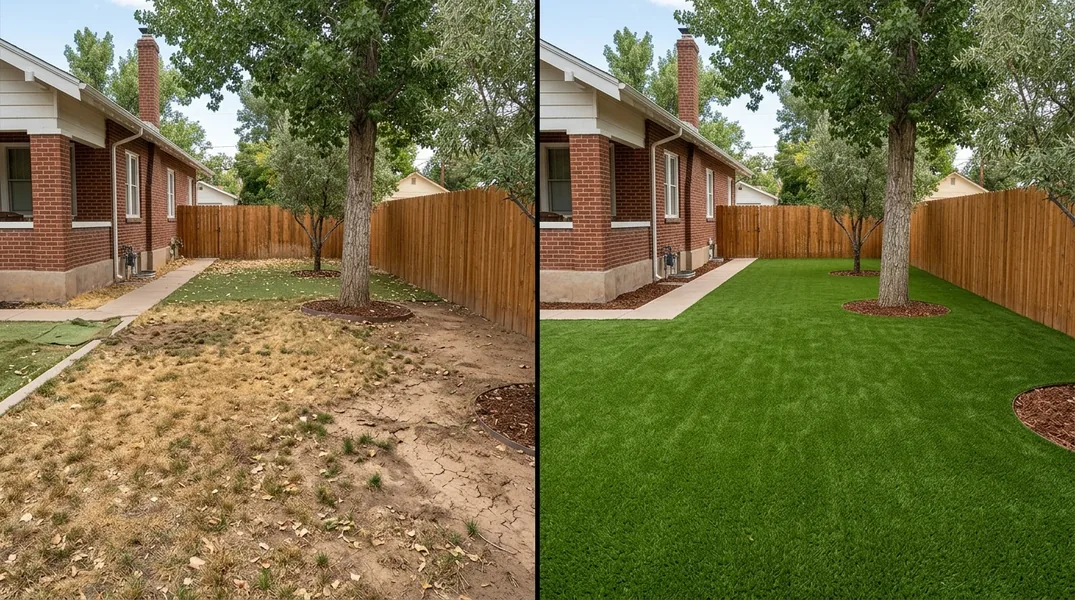
Why Grand Junction Adobe Clay Requires Special Drainage Planning
Grand Junction homeowners know that our region's adobe clay soil presents unique challenges for landscaping projects. Unlike sandy or loamy soils that naturally drain water away, adobe clay compacts tightly and holds moisture, creating pooling and drainage problems that can undermine artificial grass installations if not addressed during the base preparation phase.
When water sits beneath artificial turf, it doesn't evaporate as quickly as it would in natural grass lawns. This trapped moisture can lead to algae growth, odors, mold, and accelerated deterioration of both the turf backing and the base materials underneath. The weight and density of Grand Junction's native adobe clay make drainage planning not just a nice-to-have feature, but an essential component of any long-lasting installation. Proper Residential Artificial Grass Installation begins with understanding and working with your soil type, not against it.
What to Put Under Artificial Grass: The Foundation Matters
The base layer beneath your artificial grass is your first line of defense against drainage problems. Rather than installing turf directly on adobe clay, professional installers create a multi-layer system that redirects water and provides stable support. The foundation typically begins with excavation and grading to establish proper slope, ensuring water naturally flows away from your yard rather than pooling in low spots.
Once the site is properly graded, the next critical layer is a geotextile fabric that sits directly on the clay. This permeable membrane allows water to pass through while preventing clay particles from mixing up into your base materials. Above this, installers place crushed stone or recycled asphalt, usually four to six inches deep, which creates air pockets and channels for water movement. This aggregate layer is compacted to create a stable, level surface that won't shift under foot traffic. The specific materials and thickness depend on your yard's drainage characteristics and the type of artificial grass being installed. Many homeowners are surprised to learn that the work happening below the surface is just as important as the turf selection itself.
Artificial Grass Underlay: Choosing the Right System for Your Yard
The artificial grass underlay, sometimes called the shock pad or cushioning layer, sits directly beneath your turf and plays a dual role. It provides comfort underfoot, which is especially important for families with children or for Pet Turf & Dog Run Installation applications. Equally important, it includes drainage channels and perforations designed to move water quickly away from the turf surface and down through the base layers below.
There are several underlay options available, ranging from basic foam pads to advanced engineered systems with built-in drainage. In Grand Junction, where our semi-arid climate means occasional heavy rainfall followed by dry periods, a quality underlay with excellent drainage properties is worth the investment. Some underlays include antimicrobial treatments that resist mold and mildew growth, which adds another layer of protection in areas where moisture might linger. Your installer should recommend an underlay specifically matched to your soil conditions and intended use, whether that's a family lawn, a Putting Green Installation, or a Pool Surround Turf application.
Turf Base Prep: The Step That Determines Longevity
Professional turf base prep is where the difference between a five-year installation and a fifteen-year installation becomes clear. The process starts with a site assessment that evaluates your soil composition, existing drainage patterns, and any low spots where water naturally collects. A skilled installer will remove existing vegetation and debris, then excavate to the appropriate depth based on your specific conditions. For adobe clay in particular, this often means digging deeper than installers might in other regions to ensure adequate space for drainage layers.
Once excavation is complete, the base is built in layers. First comes the geotextile barrier, which prevents clay from contaminating your drainage materials. Next, the crushed stone or recycled asphalt is spread and compacted in stages, creating a firm, level foundation that won't settle unevenly over time. This compaction step is critical, as any soft spots or high points will eventually cause the artificial grass to develop wrinkles, pucker, or wear unevenly. A laser level is typically used to ensure the base is perfectly graded with appropriate slope for drainage. This meticulous preparation work takes time and expertise, but it's the invisible foundation that allows your artificial grass to perform beautifully for years to come.
Drainage Solutions for Adobe Clay: Preventing Common Problems
Beyond the basic multi-layer system, some yards benefit from additional drainage infrastructure. If your property has particularly poor drainage or sits in a natural low spot, your installer might recommend a French drain or perforated drainage pipe installed beneath the base layers. These systems actively channel water away from the turf area to a lower elevation or catch basin, providing insurance against the kind of moisture buildup that can plague adobe clay yards.
Another consideration is surface-level drainage around the perimeter of your artificial grass installation. Proper edging and transition materials ensure that water running off adjacent hardscapes or roof gutters doesn't pool at the edges of your turf. In some cases, a shallow swale or drainage border can be incorporated into your landscape design. The key is thinking holistically about water movement across your entire yard, not just what happens directly beneath the turf. When you're ready to discuss your specific drainage needs and get a customized plan for your property, contact Grand Junction Artificial Grass Installation at (970) 438-2585 for a free estimate that addresses your unique soil and drainage situation.
Common Mistakes to Avoid During Installation
Many DIY attempts at artificial grass installation fail because homeowners underestimate the importance of base preparation. A common mistake is installing turf directly on compacted clay with minimal or no drainage layer, hoping the turf's permeability will be enough. It won't be. Water will pool beneath the surface, and you'll notice problems within months. Another frequent error is using inadequate base material, such as sand alone or too-thin aggregate layers. Sand compacts like clay and doesn't provide the drainage channels you need. Similarly, some installers skip the geotextile barrier, allowing clay to migrate upward and compromise the stability of your base.
Improper grading is another costly mistake. If your base isn't sloped correctly, water will find low spots and settle there regardless of how good your drainage materials are. Finally, rushing the compaction process or failing to use proper equipment results in soft spots that shift under foot traffic. These aren't just cosmetic issues, they're structural problems that shorten the lifespan of your installation dramatically. Working with an experienced, local installer who understands adobe clay and has a track record of successful installations in Grand Junction helps you avoid these pitfalls entirely.
Looking for a professional artificial grass installation company in Grand Junction? Grand Junction Artificial Grass Installation responds fast for all your artificial grass installation needs.
Get a Free Quote