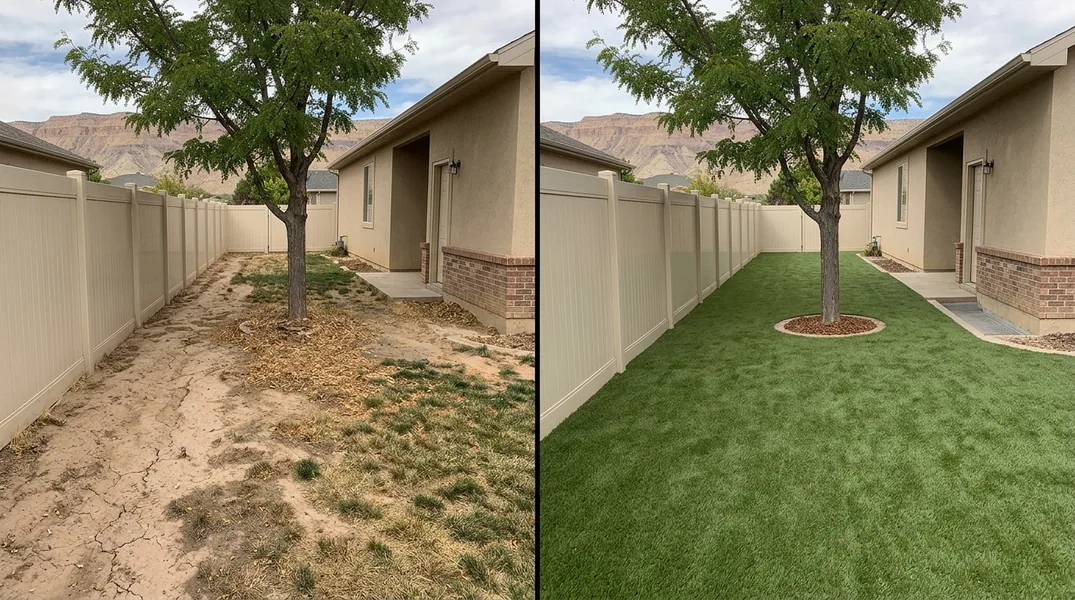
Understanding Grand Junction's Unique Climate Challenge
Grand Junction sits in the heart of Colorado's high desert, where the climate presents a genuine puzzle for homeowners trying to maintain a beautiful lawn. Summer temperatures regularly exceed 95 degrees Fahrenheit, winters can dip well below freezing, and the region receives only about 10 inches of annual precipitation. These conditions create a harsh environment that tests both natural grass and the homeowner's patience.
Real grass in this climate demands constant intervention. The intense summer heat stresses cool-season grasses, which naturally prefer milder temperatures. Winters bring freeze-thaw cycles that can damage root systems and create bare patches come spring. Meanwhile, the low humidity means water evaporates rapidly from the soil, requiring frequent irrigation to keep a natural lawn alive. For many Grand Junction residents, maintaining a lush green lawn feels less like gardening and more like a full-time job.
Turf vs Artificial Grass: The Real Maintenance Difference
When comparing turf vs artificial grass, the maintenance reality becomes crystal clear in a desert environment. Real grass requires weekly mowing during the growing season, regular fertilizing, weed control, pest management, and consistent watering. In Grand Junction's climate, that watering schedule intensifies significantly. A healthy natural lawn might need 1 to 2 inches of water per week during summer months, which translates to substantial water bills and environmental impact during a season when water is already precious in Colorado.
Artificial grass eliminates virtually all of these tasks. There's no mowing, no fertilizing, no weed pulling, and no pest problems. You won't need to water your lawn during droughts or worry about brown patches appearing after a harsh winter. The only maintenance involved is occasional brushing to keep the fibers upright and a light rinse to remove dust or debris. For busy families or homeowners who simply want a low maintenance yard, this difference alone justifies serious consideration. Residential Artificial Grass Installation means trading hours of yard work for a few minutes of basic upkeep each month.
Artificial Grass vs Real Grass: Durability in Extreme Temperatures
The performance gap between artificial grass vs real grass becomes most obvious when temperatures swing from scorching summers to freezing winters. Real grass struggles during both extremes. Summer heat causes dormancy in cool-season varieties, leading to brown, thin patches. Winter freeze-thaw cycles heave soil, break root systems, and create bare spots. Spring recovery is unpredictable, and many homeowners find themselves replanting sections of their lawn year after year.
Modern artificial turf is engineered specifically to withstand temperature extremes. Quality synthetic grass maintains its color and structural integrity whether it's 100 degrees or 10 degrees outside. The fibers don't freeze solid and crack, and they don't wilt under intense UV exposure because they're designed to resist ultraviolet degradation. When properly installed by professionals who understand local conditions, an artificial lawn can look vibrant and healthy throughout the entire year without seasonal die-off or recovery periods. This consistency is particularly valuable for homeowners who take pride in their property's appearance regardless of the season.
Water Conservation: A Critical Advantage in the High Desert
Colorado water rights and conservation are serious matters, and Grand Junction residents are increasingly aware of their water footprint. Maintaining a natural lawn in this region is water-intensive by necessity. Even with efficient irrigation systems, you're looking at 40,000 to 60,000 gallons of water per year for a typical residential lawn. That consumption adds up quickly on your water bill and raises legitimate environmental concerns during drought years.
Switching to artificial grass eliminates lawn irrigation entirely. You'll save tens of thousands of gallons annually while still enjoying a green, attractive outdoor space. For environmentally conscious homeowners or those facing water restrictions, this benefit alone often becomes the deciding factor. Beyond personal savings, choosing artificial turf contributes to broader water conservation efforts in a region where every drop matters. If you're interested in exploring how much water and money you could save, our team at Grand Junction Artificial Grass Installation can provide specific projections based on your property size.
Cost Comparison: Initial Investment vs Long-Term Savings
The upfront pricing for Residential Artificial Grass Installation is higher than seeding or sodding a natural lawn. However, this comparison becomes misleading if you only look at year one. Over a 10 to 15 year period, the total cost of ownership heavily favors artificial grass. Real lawn maintenance includes mowing equipment, fertilizers, herbicides, pest control, irrigation system maintenance, water bills, and eventual reseeding or resodding. These costs accumulate year after year.
Artificial grass requires minimal ongoing expenses. You're not buying fuel for a mower, fertilizers, or weed killers. Your water bill drops dramatically or disappears entirely for lawn irrigation. The turf itself is durable and typically comes with warranties of 10 to 15 years. When you calculate the cumulative cost of maintaining natural grass over the same period, most homeowners find that artificial grass becomes the more economical choice by year three or four. To understand the specific financial picture for your property, we encourage you to request a free estimate from Grand Junction Artificial Grass Installation. We'll break down realistic costs and help you see the full financial picture.
Choosing the Right Solution for Your Grand Junction Home
The decision between maintaining real grass and installing artificial turf ultimately depends on your priorities, lifestyle, and property goals. If you genuinely enjoy lawn care, have time for regular maintenance, and don't mind the water consumption, real grass remains a viable option. However, if you value your free time, care about water conservation, want a consistently attractive lawn year-round, and prefer to avoid the chemical treatments often necessary in desert climates, artificial grass makes compelling sense.
For many Grand Junction homeowners, the choice becomes clear once they understand how artificial grass performs in our specific climate. Unlike generic comparisons found online, our team understands the unique challenges and opportunities that come with high desert living. Whether you're interested in a standard Residential Artificial Grass Installation, Pet Turf & Dog Run Installation, or other specialized applications, we're here to help you make an informed decision. Contact Grand Junction Artificial Grass Installation at (970) 438-2585 or visit our website to discuss your specific needs and get started on your transformation today.
Looking for a professional artificial grass installation company in Grand Junction? Grand Junction Artificial Grass Installation responds fast for all your artificial grass installation needs.
Get a Free Quote